Playing catch-up. Prepare for a long post.
A weird thing I’m noticing as I travel: the toilet paper changes. I guess that is true in the United States as well. But honestly, the quality varies, the pictures on the paper changes, the softness is always a gamble. Germany had pretty thin toilet paper with green leaves printed on it. The toilet paper I have in my room in Nørrebro is borderline rough and definitely one-ply. St Andrews had the softest and thickest so far.
I think I mentioned in my last post that I’m hearing references to vicki-pedia. Today I heard wice-president and I’ve been hearing wodka. So here’s my potentially ignorant American question: If Danes can pronounce the v and w sounds, why do they switch the sounds and the letters?
Ok, so since last week, I’ve been to Scotland, Western Denmark, Northern Germany and back to København. This means I’ve had to have British Pounds, Danish Kroner, and Euros in my wallet. Talk about getting confused with coins.
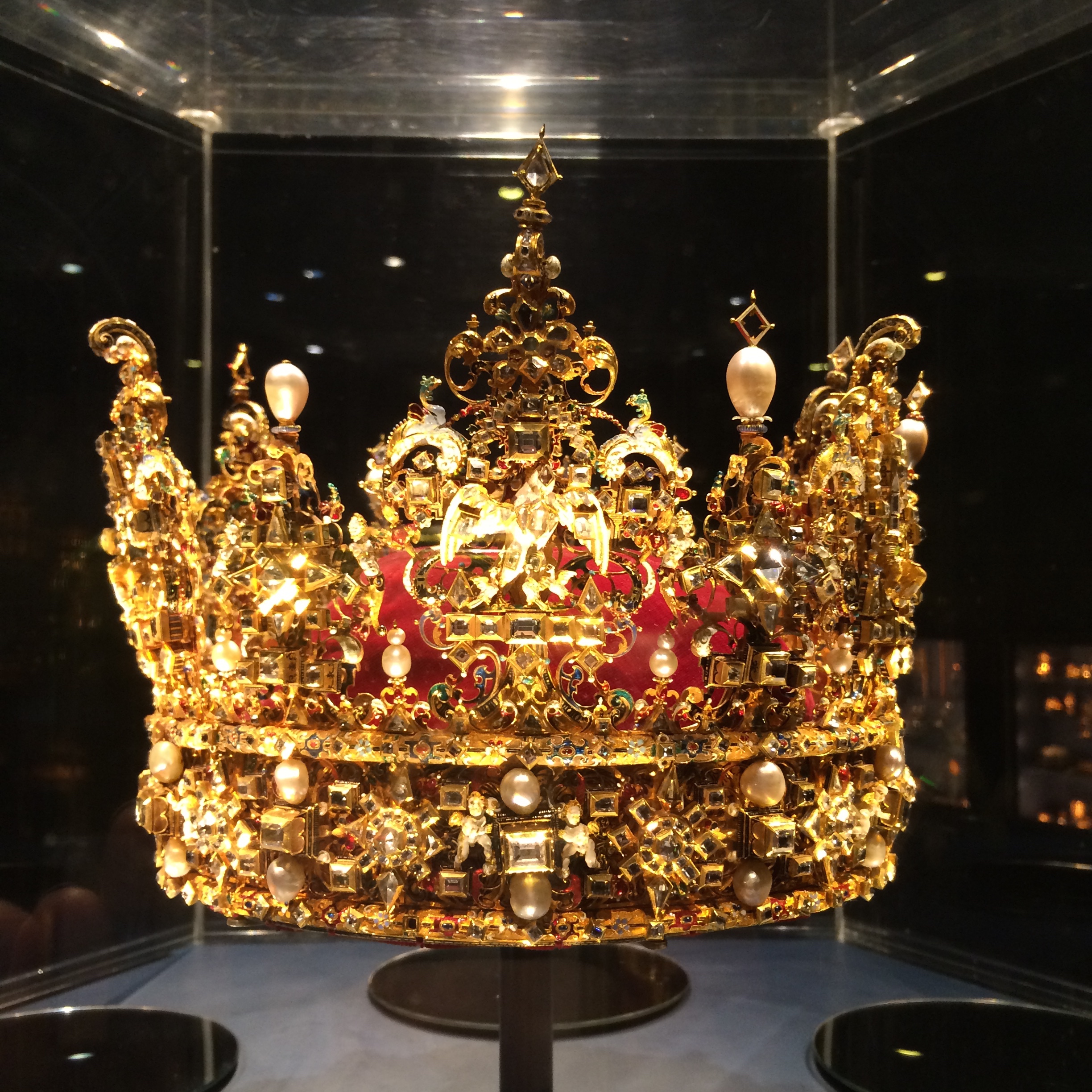
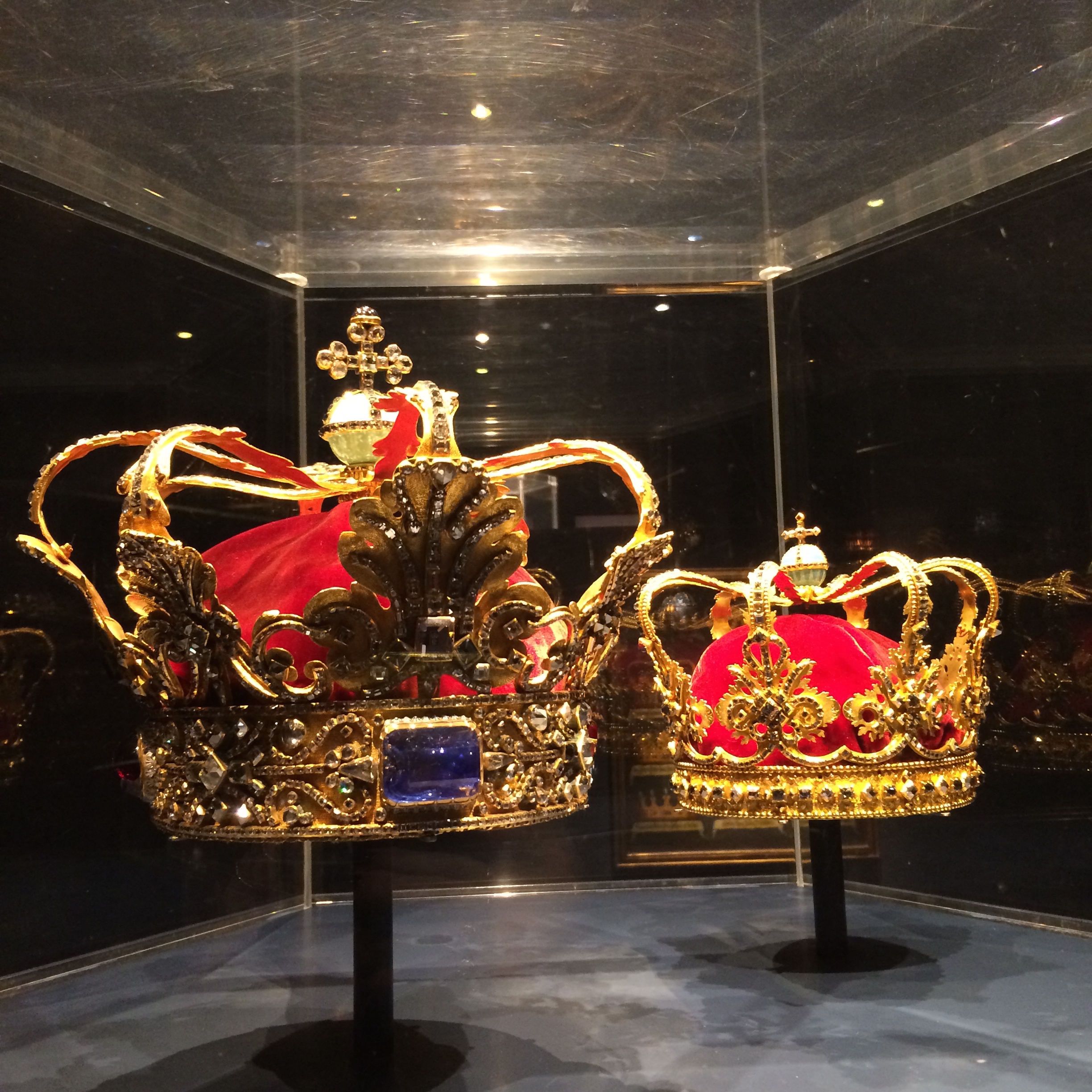
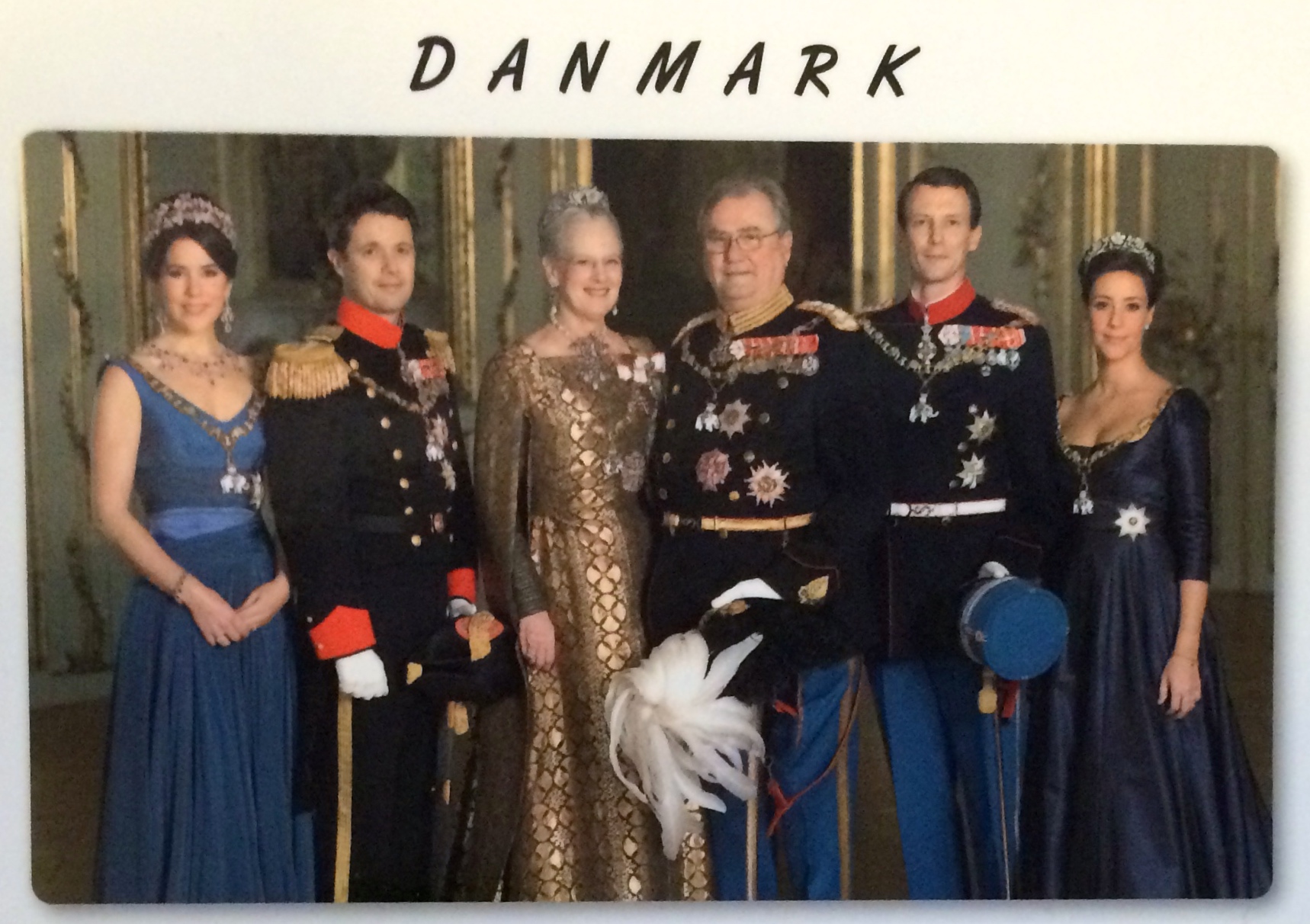
Beginning with Friday in Copenhagen, I had the privilege of visiting Rosenborg Castle before it opened to the public. My teacher for Royalty in the Land of Equality works at the museum that was formerly King Christian IV’s summer palace. Only four generations of royals used the castle as a residence because it is smaller, in the center of the city, and freezing due to some of the architectural decisions. The Crown Jewels are kept in the Treasury of the Castle. This is a picture of Christian IV’s crown:  All the jewels, metals, stones, everything is real. Below is a picture of his son, Frederik III’s crown (the bigger one; the smaller one is his wife’s). You’ll notice the style of crowns changed from one king to the next. When Frederik III became king, the trend was a closed crown. That massive blue stone you see would sit above his forehead — there is another one on the other side — and is indeed a giant sapphire. Two huge garnets framed his ears. And they are garnets because it’s nearly impossible to find rubies that large. Oh, and there are over 2500 diamonds on the crown.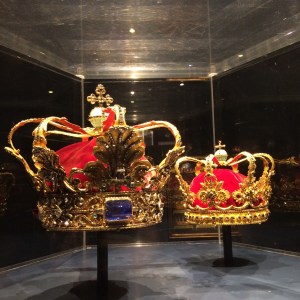
I also learned that kings and queens wore black velvet robes because black represented luxury and wealth. Apparently, this is because black is not a color that can be made from natural fibers and pigments as is the case with colors like blue or red. You often see royal jewels made with pearls as well as images of the royal family wearing pearls because pearls were and are the most common precious stones.
After class, I went to the airport. Hannah picked me up in Edinburgh (pronounced Ed-in-brr-uh, for those who’ve wondered) on Friday evening in her rental white mini cooper. Her blue one was in the shop after someone crashed into the door. We drove an hour and half to St. Andrews, where she goes to school, and I met her friend Emily at a delicious dinner at Forgans, a restaurant that sponsors the University of St Andrews Polo Club. On Saturday morning, Hannah took me to the beach to watch polo chukkas, or short 7.5 minute matches. 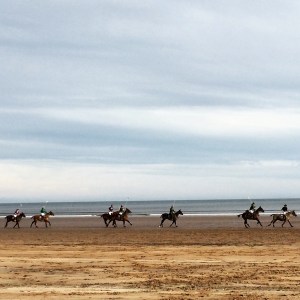 In the afternoon we drove down the coast to visit Anstruther, one of the old fishing towns, for a lunch of fish and chips. On Sunday, we took the train into Edinburgh to see Edinburgh Castle. While impressive, I am drawn to the Danish castles and palaces more. Edinburgh Castle highlights Scotland’s bloody history and felt dark to me — in an overpowering, not so royal sort of way. Beach polo was definitely the highlight of the trip. And seeing Hannah, of course. My trip was timed nicely with what we are learning in European Politics. We’ve talked about the state of the United Kingdom in the European Union. It is a member state but it’s future activity/involvement is in a state of unpredictability. The next UK elections are in May. Flying into the UK on an American passport but from another European country, I experienced major differences in immigration control, despite the EU’s freedom of movement (of people). The officer in Scotland drilled me with questions and made me nervous. The Danish officers, both times I’ve flown into Denmark, smile and stamp my passport, no questions asked.
I returned to Copenhagen late Sunday night. Quickly unpacked and repacked for my 7:45am departure to Western Denmark for my European Politics Short Study Tour. We visited with The 2nd Brigade of the Danish Army and saw Dybbøl Banke, the battle site of a key battle of the Second War of Schleswig. The Danes suffered a crushing defeat on April 18, 1864 that resulted in the loss of the Schleswig-Holstein region to the Germans. We spent the night in Sønderborg after a fun dinner and beer tasting at Brøggeriet. On Tuesday, our class got back on the bus and went to the University of Southern Denmark to hear a lecture on the Danish-German border region followed by a visit to the A.P. Møller Skolen of the Danish Minority Schools. The general gist of this school is that it is a Danish school in Germany and is a naturally-lit open building. The 8th grade students described the school as having “a happy air.” After ice skating and dinner in Lübeck, Germany, we went to bed. Wednesday consisted of a bus/walking tour of the Hanseatic City of Lübeck, the second largest city in Schleswig-Holstein, known because it was only bombed once during World War 2. It is the only German town that still has its medieval foundations. The rest of the day was on the bus for five hours back to Copenhagen. And five hours of feeling semi-nauseous after eating marzipan from the Niederegger Marzipan Salon in Lübeck, another highlighted feature of the city. The Salon has figures of famous people made of 500 lbs (pronounced libs by our very German tour guide, Mr. Mustache) of marzipan.
I should mention that this week is Core Course Week meaning that everything we do is related to our core courses, mine being European Politics. The Short Tour was fun for the social element. I definitely got to know some of my classmates and branch out beyond the Bowdoin bubble in Copenhagen. As for the academic portion, it was pretty lame. I’m looking forward to our Long Study Tour to Brussels and The Hague in two weeks though.
Today I visited the Danish Ministry of Foreign Affairs, again with my EP class. During our two hour break before class this afternoon, I went shopping and found the navy blue booties I’ve been in search of for, oh, five years now? So that was a success. I’m looking more European every day.
I did laundry today. And will probably have pasta for dinner again.
Tomorrow I’m scheduled to have a lecture on the Euro Crisis and the State of the European Economy. Coming full circle regarding my exposure to three currencies in three days? Then we will watch “The President,” a documentary about how the EU got its first “president” after the Big Bang Enlargement in 2004/2007 when the number of member states went from 15 to 27, and now 28 since Croatia joined in 2013.

 DIS 2015: A Non-Danish Blonde in Copenhagen